

KEY TAKEAWAYS
- Non-comedogenic labels are not a guarantee — the ratings come from rabbit ear tests, not human facial skin
- Pillowcases, phone screens, and hair products are among the most overlooked breakout triggers
- Stacking retinol, acids, and vitamin C together can damage your skin barrier and cause more acne, not less
- Hormonal breakouts appear deep on the chin and jaw and cannot be fixed with skincare alone
- A simple elimination method, one change every two weeks is the only reliable way to find the real cause
Why are you still breaking out with a skincare routine?
You can still break out with a consistent skincare routine because of factors that go beyond your products — like pillowcase bacteria, hormonal shifts, pore-clogging ingredients hiding in your moisturiser, or applying actives in the wrong order. The fix usually isn’t a new product. It’s finding the actual cause.
You’ve been following a consistent skincare routine. You use the same skincare products every morning and the same routine at night. You have not skipped any days for weeks.
But you are still breaking out. And your skincare is not working for acne the way you expected it to.
That is really frustrating because you feel like you are doing everything right. But just because you are consistent it does not mean you are doing everything correctly. Most of the time the reason you are still getting acne is not what you think it is.
I went through this for almost a year. I had the same routine but nothing changed and my skin kept breaking out. Then instead of adding more products, I started removing them, one at a time, until I found the real cause. Most of the things that were causing my acne had nothing to do with my face wash.
This article covers the hidden causes of acne that most skincare guides skip completely. I’ll also walk you through a process to figure out what is causing yours. If you want to understand what skin purging vs a real breakout looks like before going further, that guide is worth reading first.
The Overlooked Causes That Have Nothing to Do With Your Products
There are some things that cause acne that nobody talks about, things that have nothing to do with the products you use on your face. Check these first before you blame your cleanser or serum.

Your pillowcase and phone screen
Your pillowcase and phone screen are two things that can cause acne. Your pillowcase collects oil, dead skin cells, hair product residue and bacteria every night. By the end of the week you are pressing your face into all of these things for six to eight hours. This is one of the most common and overlooked causes of pillowcase acne. You should wash your pillowcase once a week.
If you are breaking out on one side of your face you should wash it every two to three days.
Your phone screen is also a problem. When you hold your phone against your cheek during calls you are transferring bacteria onto your skin. If you get acne on your cheek or jaw and it is in a band exactly where your phone rests that is probably the cause.
You should use speaker mode or earphones & wipe your screen every day.
Hair products touching your face
Hair products can also cause acne. Shampoo, conditioner, dry shampoo, hair oils, all of these can drip onto your forehead and hairline when you shower, or transfer from your hair when it touches your face. Hairline and forehead acne that doesn’t respond to anything you put on your skin is very often a hair product issue.
Try tilting your head back when rinsing conditioner, and apply your face products before styling your hair.
Pore-Clogging Ingredients Hiding in Products You Think Are Safe
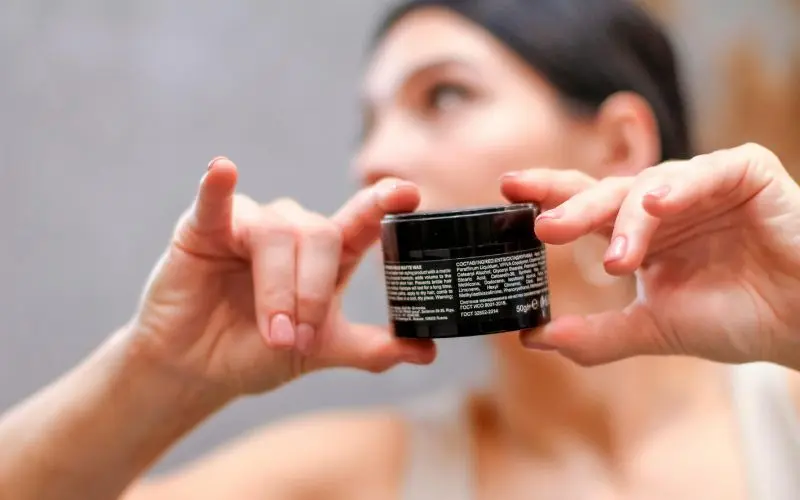
Non-comedogenic does not mean it won’t clog your pores but the skincare industry doesn’t always tell you this. Non-comedogenic does not mean it won’t clog your pores but the skincare industry doesn’t always tell you this. The term has no legal definition and isn’t regulated by any governing body, which is exactly why a non-comedogenic label can still let you down.
These ratings come from tests on rabbit ears in labs, not on human skin. They are a rough guide, not a promise. This is exactly why so many people find themselves still breaking out with a skincare routine that looks perfectly fine on paper. If your bumps don’t look like typical acne at all, the rough bumpy skin guide covers four conditions most people misidentify and treat incorrectly for month
A lot of people following a consistent skincare routine still getting acne find out later that one product they assumed was safe, usually their SPF or moisturiser contains something that blocks their pores.
Your cleanser is rinsed off in seconds. Your SPF sits on your skin for hours. That is where the damage usually happens. This is also why non-comedogenic products can still cause breakouts in many people.
Check your current products against this table:
| Ingredient | Risk | Commonly Found In | What to Do |
| Isopropyl Myristate | Very High | Foundations, body lotions, some SPFs | Avoid completely if acne-prone |
| Coconut Oil | High | Natural moisturisers, DIY balms, hair oils | Skip on face — safe for hair only |
| Sodium Lauryl Sulphate | Barrier Disrupter | Foaming cleansers, shampoos | Switch to sulphate-free cleanser |
| Algae / Seaweed Extract | Moderate–High | Anti-ageing serums, toners | Check specific type on CosDNA |
| Heavy Silicones | Low–Moderate | Primers, serums, some moisturisers | Patch-test; fine for most skin types |
You can check any product on CosDNA.com, paste the ingredient list and it flags comedogenic and irritant ingredients by severity. I check every new product on it before buying.
Wrong Application Order and Conflicting Actives
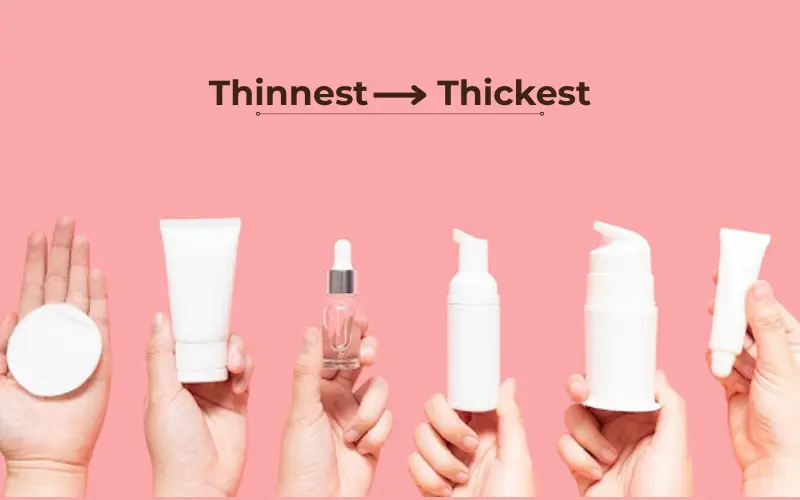
Your routine might have exactly the right products. But if you are applying them in the wrong order or mixing ingredients that conflict, your skin will keep breaking out.
You should apply products from thinnest to thickest. Water-based serums go before moisturiser, which goes before SPF. If you apply a heavy cream first, it creates a seal that stops lighter serums from absorbing properly.
At night: cleanser, then your active (either an acid or retinol, not both on the same night), then moisturiser.
A 2022 review published in the Journal of Cosmetic Dermatology found that layering multiple strong actives significantly increases the risk of skin barrier damage and acne. The barrier keeps bacteria out. When it is damaged, acne-causing bacteria enter more easily. This is one of the most common reasons skincare makes acne worse, not better.
Avoid using these combinations together:
- Retinol + vitamin C on the same night — pH conflict. Use C in the morning, retinol at night
- Retinol + AHAs or BHAs on the same night — too much cell turnover at once, common cause of barrier damage
- Multiple exfoliants in one routine — AHA + BHA + enzyme together is almost guaranteed irritation
If your skin is already overwhelmed, going back to basics is the answer. My 3-product skincare routine for beginners covers exactly what to use when everything else is making things worse.
Hormonal Patterns and Diet Your Skincare Cannot Fix
A 2021 study in the Journal of the European Academy of Dermatology and Venereology found that 73% of adult women with acne had hormonal fluctuations as a primary trigger, even those following otherwise healthy routines. This matters because no amount of niacinamide or salicylic acid overrides hormone breakouts in skincare.
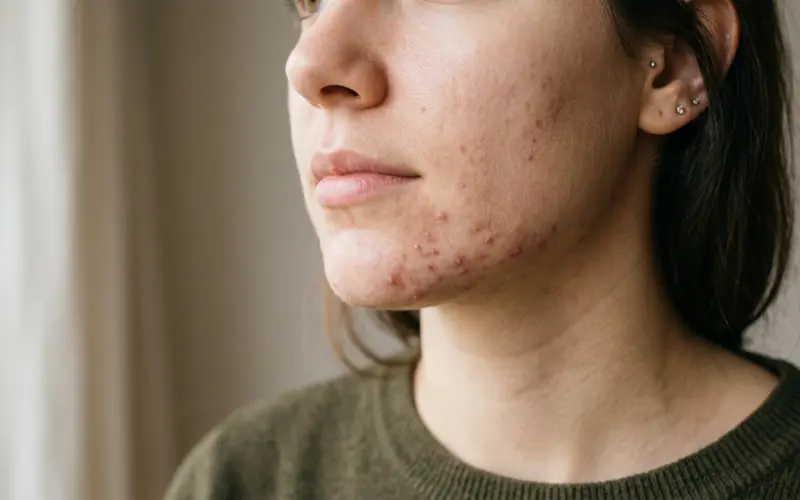
Hormonal acne is deep, painful. Usually sits on the chin, jawline and lower cheeks. It usually gets worse in the week before a period when estrogen drops and oil production increases. If your breakouts follow this pattern and sit low on your face, skincare can help manage them. It cannot solve them. You should see a GP or dermatologist who can explore options.
Diet is also genuinely connected. Research published in the Journal of the American Academy of Dermatology found that high glycaemic index diets that spike blood sugar quickly, are associated with increased acne severity. Skimmed dairy has shown a similar link in some studies. It doesn’t mean everyone needs to cut sugar or dairy. But if your acne persists despite a solid routine, tracking whether it worsens after certain meals is a useful experiment.
Stress is another factor. Cortisol increases oil production. During high-stress periods your skin may break out even if you have not changed anything in your routine. The routine didn’t stop working, your stress hormones took over.
A Simple Elimination Process to Find the Real Cause
First you should confirm whether your skin is actually breaking out or going through purging. Purging is caused specifically by retinoids and exfoliating acids. It appears where you normally get spots and clears within two to six weeks. A true breakout appears in new areas, doesn’t improve week by week, and can be triggered by any product, including moisturisers.
A 2016 study in the British Journal of Dermatology found that participants using retinoids who stopped at week two never reached the improvement that came by week six. So before eliminating anything, make sure you are not quitting something that was actually working.
If it is a breakout you should strip back to three products. Stop everything except a cleanser, a plain moisturizer and SPF. Give your skin two weeks. If it clears the culprit is something you removed.
Then you should reintroduce one product every two weeks. Add one thing back, use it daily for two weeks and watch what happens. If a breakout appears you have found your trigger.
You should also check each ingredient list on CosDNA before reintroducing. Look for anything rated 4 or 5 on the scale.
You should change factors one at a time. Get a pillowcase every two to three days. Wipe your phone daily. Change how you rinse your conditioner. Track each change the way you track products.
If nothing clears after 12 weeks you should see a dermatologist. Deep cystic acne, acne that scars or breakouts following a pattern all need professional treatment that skincare alone cannot give you.
For a realistic timeline on what each ingredient can and can’t do, my 30-day skincare routine results document exactly what changed week by week and what didn’t, so you know what to actually expect before deciding a routine has failed.
And if you’re wondering how long to give your current routine before drawing any conclusions, how long does skincare take to work? Guide sets honest timelines for each ingredient type.
Frequently Asked Questions
Why am I still breaking out with a good skincare routine?
The most common hidden causes of acne are pore-clogging ingredients in your SPF or moisturiser, dirty pillowcases, phone screen contact, hair products touching your face, conflicting actives damaging your skin barrier, and hormonal shifts. The fix is usually elimination, removing things one at a time & not adding something new.
Can non-comedogenic products still cause breakouts?
Yes. Non-comedogenic products can still break you out because the ratings come from rabbit ear tests in labs, not from human facial skin. They are a rough guide, not a guarantee. Always check ingredient lists on CosDNA.com rather than relying on the label alone.
How do I know if it’s purging or a breakout?
Purging is caused only by retinoids and exfoliating acids. It appears where you normally get spots and clears within two to six weeks. A breakout caused by a product appears in new areas, doesn’t follow a pattern, and doesn’t improve week by week. Moisturisers and cleansers cannot cause purging.
Can hormones cause acne even with a consistent skincare routine?
Hormone breakouts in skincare are very common. Hormonal acne sits deep on the chin and jawline, is often cystic, and worsens before menstruation. Skincare can manage it to some degree but cannot change hormonal signalling. A GP or dermatologist can offer treatments that are far more effective.
Should I stop my skincare routine completely if I’m breaking out?
Don’t stop everything at once because that tells you nothing. Strip back to three products: a gentle cleanser, a plain moisturiser, and SPF. Give your skin two weeks. If it settles, something you removed was the cause. Then reintroduce products one at a time, two weeks apart.
How often should I change my pillowcase to prevent acne?
At minimum once a week. If you are actively dealing with pillowcase acne, breaking out on one side of your face, change it every two to three days. Silk or satin pillowcases cause less friction overnight, though any clean pillowcase changed regularly helps.
What skincare ingredients most commonly clog pores?
Isopropyl Myristate, coconut oil, algae extracts, and some heavy silicones are among the most problematic for acne-prone skin. These show up in moisturisers, sunscreens, and primers. Paste any ingredient list into CosDNA.com and it flags them in seconds.
When should I see a dermatologist about acne that won’t clear?
If you have worked through the elimination process, checked your ingredients, addressed your pillowcase and phone, and your acne is still not clearing after twelve weeks, make an appointment. Deep cystic acne, breakouts that scar, or acne that significantly affects your daily life all need professional care that skincare cannot replace.
The Bottom Line
If you are still breaking out with a skincare routine it does not mean your routine is bad. It means you have not found the real cause yet.
Most of the time it is not about buying something better. It is about removing a hidden trigger, a pore-clogging ingredient in your SPF, a dirty pillowcase, conditioner dripping onto your hairline, or two actives quietly destroying your barrier when used together.
The process of finding the cause can be slow. It takes patience. You need to write things down and keep track of what you are doing. You should start with three products. Change one thing every two weeks. If still you do not see any improvement after twelve weeks then you should go see a dermatologist. Some problems need more than skincare and knowing that is not giving up.
Related Articles
- Skin purging vs breakout — how to tell the difference when your skin gets worse after starting something new
- 30-day skincare routine results — what actually happens in the first month of a consistent routine
- 3-product skincare routine for beginners — what to go back to when everything else is making things worse
- How long does skincare take to work — realistic timelines for each ingredient type
- Rough bumpy skin that isn’t acne— 4 types of skin conditions that is not acne & the causes
- Why a Non-Comedogenic Product Might Still Break You Out— A complete guide on non-comedogenic & all the myths revolving around it
Sources
- Journal of the European Academy of Dermatology and Venereology (2021) —Hormonal fluctuations as primary trigger in adult female acne
- Journal of the American Academy of Dermatology —High glycaemic index diets and acne severity
- British Journal of Dermatology (2016) —Topical retinoid adherence and early breakout patterns
- Journal of Cosmetic Dermatology (2022) —Skin barrier disruption from stacking multiple active ingredients
- American Academy of Dermatology —Skincare tips for acne-prone skin and pillowcase hygiene
About the Author
Hi, I’m Sidra.
I’m not a dermatologist or any kind of skincare pro, I’m just someone like you, who got sick of constantly switching up products and never having a clue what was really working. After years of trial and error, I decided to focus on one thing: consistency.
I test routines on myself, I track results in detail, and I write about what realistically shifts and what doesn’t. My aim is to dispel hype and discuss skin-care the way I would with a friend: practical, honest, and backed by patience instead of promises.
Skin type: Normal to dry skin with mild sensitivity
The information in this article is for educational purposes only and does not replace professional dermatological advice. If you have a specific skin condition or concern, please speak with a qualified healthcare provider.