

KEY TAKEAWAYS
- Your skin physically operates in two different modes: protection during the day, repair at night. Your routine should match each one
- SPF and vitamin C belong in the morning — not because of preference, but because of how they work biologically.
- Retinoids, AHA/BHA exfoliants, and heavy facial oils belong at night for the same reason — science, not skincare marketing.
- If your routine is just a cleanser and a moisturiser, using the same one twice a day is perfectly fine.
- If it includes SPF, vitamin C, or retinoids — timing matters significantly and skipping it causes real problems.
- Niacinamide, a basic moisturiser, and a gentle cleanser work safely in both routines.
- You do not need two full separate product sets. You need to put the right things in the right half of the day.
What is morning vs night skincare routine?
A morning skincare routine focuses on protection defending your skin from UV rays, pollution, and environmental damage during the day. A night skincare routine focuses on repair supporting cell turnover, barrier restoration, and deeper absorption of active ingredients while you sleep. The two routines use different products because your skin has different biological needs at each time.
Most beginner skincare guides tell you what to buy. Very few tell you when to use it, or why the timing changes everything.
I had a cleanser, a moisturiser, a vitamin C serum, and a retinol. I was using all four in the morning, then switching to two at night because I’d run out of time. My skin broke out. It felt sensitive and patchy for weeks. The answer wasn’t my products. It was the timing.
If you’ve ever wondered whether you really need a separate morning vs night skincare routine, or if doing the same thing twice a day is fine, this is the article I wish I’d found first. I’ll explain what your skin is actually doing during each half of the day, which products belong in the morning, which belong at night, and which ones genuinely don’t care either way.
Why Your Skin Needs Different Products Morning and Night
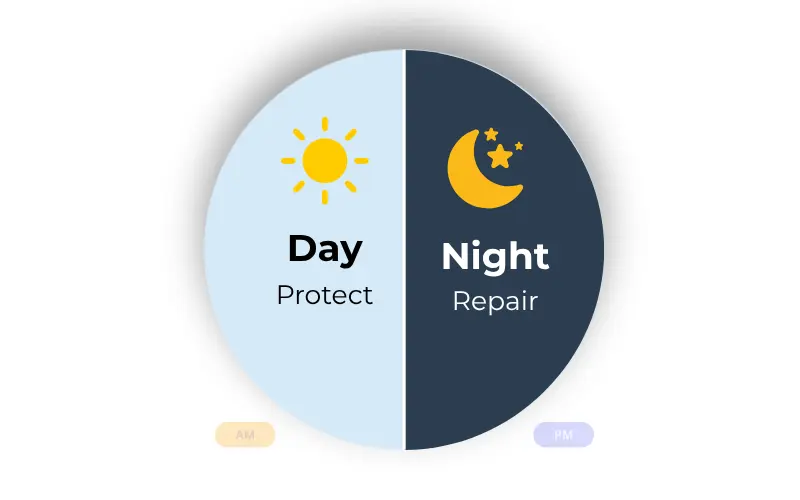
Your skin runs on a 24-hour internal clock. Dermatologists call this your skin’s circadian rhythm, and it genuinely changes what your skin does, what it absorbs, and what it needs from hour to hour.
During the day, your skin is in protection mode. It’s your barrier against UV radiation, pollution, and environmental free radicals. Oil production is at its highest, and the whole system is geared toward keeping damage out.
At night, that shifts completely. Your skin switches into repair mode. Cell turnover accelerates. The barrier restores itself. Blood flow increases. Your skin becomes more permeable, so active ingredients absorb more deeply and work more efficiently.
A 2014 review in the Journal of Investigative Dermatology confirmed that DNA damage repair and epidermal cell proliferation peak during sleep (see Spörl et al., 2012, PNAS and Gaddameedhi et al., 2011, PNAS). This isn’t a marketing language. It’s measurable biology.
Why the same products for both routines misses this
If your routine is a gentle cleanser and a moisturiser, using the same two products morning and night is completely fine.
The problem starts when you add products with a specific biological purpose tied to timing, then use them at the wrong time. Vitamin C neutralises free radical damage from UV. Applied at night, that function disappears. Retinol degrades in UV light. Applied in the morning, you’re paying for something and immediately destroying it.
This is the core reason a morning vs night skincare routine for beginners matters. It’s not about having more products. It’s about not wasting the ones you already have.
Morning Skincare Routine Steps: What to Use and Why
SPF, the one product you should never skip in the morning
SPF has one job: protecting your skin from ultraviolet radiation. The Skin Cancer Foundation estimates UV-induced damage accounts for up to 90% of visible skin ageing, including wrinkles, dark spots, and loss of firmness. No serum or treatment reverses what consistent UV exposure builds over years.
At night, SPF has zero function. It’s not harmful, just completely pointless after dark.
Apply SPF as the last step of your AM routine every single morning.
If you’re building your first routine, the only minimal skincare routine beginners actually need covers exactly how to layer SPF before you add anything else.
Vitamin C and antioxidant serums
Vitamin C neutralises free radicals created by UV and pollution. Applied in the morning, it works alongside your SPF to give your skin two layers of environmental defence. At night, that protective job simply isn’t needed. The short rule: vitamin C in the morning, retinol at night. They have incompatible pH requirements and each thrives in the opposite half of the day.
Lightweight daytime moisturiser
Your skin barrier is intact after sleep, so a lightweight non-occlusive formula is all you need in the morning. A heavy cream can sit on top rather than absorbing, interfere with how SPF applies, and feel uncomfortable under makeup. A heavy cream can sit on top rather than absorbing, interfere with how SPF applies, and feel uncomfortable under makeup, and if that absorption gap is why your foundation looks off, the reason is explained in why your skincare routine is making your makeup cakey.
Night Skincare Routine Steps: What Actually Works While You Sleep
Retinoids, the most common timing mistake beginners make
Retinol is the most clinically supported over-the-counter ingredient for long-term changes to texture, fine lines, and skin tone (Mukherjee et al., 2006, Clinical Interventions in Aging). But it degrades in UV light. Apply it in the morning, step outside, and you’ve largely neutralized what you just used. It also makes your skin photosensitive, and using it without SPF in the morning directly increases UV damage risk.
For a full breakdown of how retinol works, realistic timelines, and how to use it alongside niacinamide and hyaluronic acid, the complete beginner guide to all three active ingredients covers it step by step.
At night, your skin’s repair mode and increased permeability mean retinol absorbs more effectively. Cell turnover is already accelerating. Retinol works with that process, not against it. The answer to when to use retinol, AM or PM, is always PM. That’s photochemistry, not preference.
If you’re new to retinol, how long does skincare take to work covers the realistic three-to-six-month timeline and why most people quit too soon.
Exfoliating acids, AHAs and BHAs
AHAs (glycolic, lactic) and BHAs (salicylic) increase cell turnover and raise UV sensitivity. Using them in the morning means you’re starting the day with more vulnerable skin even with SPF on. At night they work without that risk, clearing dead cells while your skin is already turning over. Don’t use them on the same night as retinol. Alternating nights avoids barrier disruption.
You can read more about what happens when you stack conflicting actives in why you’re still breaking out with a consistent skincare routine.
Heavy facial oils and rich repair creams
Your skin absorbs oils more efficiently during the repair phase at night. The same oil that sits on top during the day absorbs far more readily after dark. Heavy creams at night also act as occlusive sealants, locking in the actives you just applied. In the morning, that same texture traps products underneath and sits greasy under SPF.
Skincare Products That Work for Both AM and PM Routines
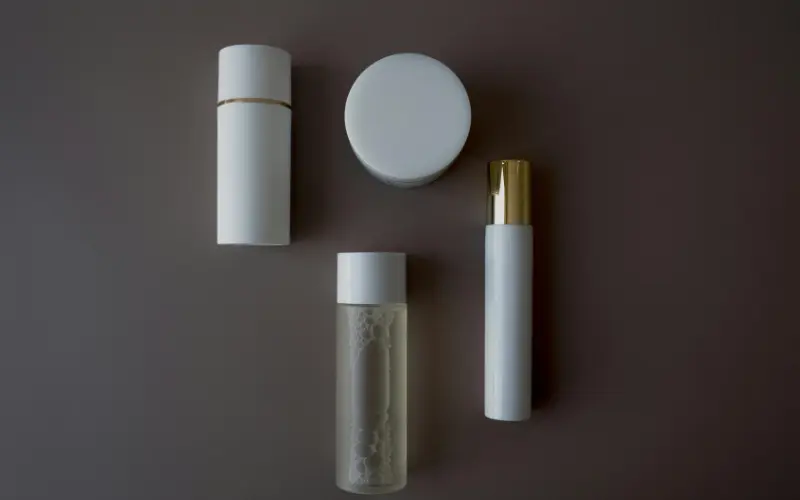
A gentle cleanser
Morning removes overnight oil and sweat. Night removes SPF, makeup, and pollution. A fragrance-free, sulfate-free cleanser works for both without disrupting your barrier. The one PM-only exception: double cleansing to fully remove sunscreen. In the morning, one gentle cleanse is enough.
A basic moisturiser
Ceramides or hyaluronic acid work in both routines. Lighter in the morning before SPF, richer at night if your skin runs dry. Don’t skip it at night assuming your skin doesn’t need it.
As covered in the only minimal skincare routine beginners actually need, dehydrated skin overproduces oil in response to dryness, and skipping moisturiser often makes oiliness worse, not better.
Niacinamide
Niacinamide is the most flexible ingredient in a beginner routine. It regulates oil, supports the barrier, reduces pore appearance, and has no photosensitivity concern whatsoever (Draelos et al., 2006, Journal of Cosmetic and Laser Therapy). Use it in the morning, at night, or both. If you want one serum that works across the full day, this is it.
Morning vs Night Skincare Routine: Full Product Comparison
| Product | Morning (AM) | Night (PM) | Notes |
| SPF | ✅ Yes, last step | ❌ No benefit | Only works against UV. Zero function at night. |
| Vitamin C / Antioxidants | ✅ Yes, before SPF | ⚠️ Optional only | Works best when environmental stressors are present. |
| Lightweight moisturiser | ✅ Yes | ✅ Yes | Swap for richer cream PM if skin is dry. |
| Retinol / Retinoids | ❌ Never | ✅ Yes, after cleanser | Degrades in UV. Causes photosensitivity in the morning. |
| AHA / BHA exfoliants | ❌ Avoid | ✅ Yes, not same night as retinol | Increases UV sensitivity. Best reserved for PM. |
| Heavy facial oils | ⚠️ Not ideal | ✅ Yes | Absorbs more efficiently during the repair phase. |
| Gentle cleanser | ✅ Yes (single cleanse) | ✅ Yes (can double cleanse) | Double cleanse PM only. Removes SPF fully. |
| Niacinamide serum | ✅ Yes | ✅ Yes | No timing conflict. Works in both. |
| Rich night cream | ❌ Too heavy for AM | ✅ Yes | Occlusive texture doesn’t sit well under SPF. |
Can I Use the Same Skincare Routine Morning and Night?
This is the most Googled question about AM and PM skincare. Here’s the honest answer.
Cleanser + moisturiser only: yes, the same routine twice a day is completely fine. Many dermatologists recommend starting exactly here.
Routine includes SPF: you’re wasting product at night. SPF has zero function after dark. Use it in the morning, skip it at night.
Routine includes vitamin C or retinol: no. Retinol in the morning degrades in UV and raises photosensitivity. Vitamin C at night loses its entire protective function. Both together at any time create a pH conflict that weakens how well either works.
The one situation where ignoring the AM/PM split causes real damage: using retinol in the morning. The ingredient stops working as intended and your skin becomes more UV-sensitive without any of the benefit that’s supposed to justify it.
If you’re building on a three-product base and thinking about what to add next, how long does skincare take to work will set honest expectations before you make any changes.
Simple AM and PM Skincare Routine Steps for Beginners
You don’t need ten products. You need the right ones in the right order.
Morning routine steps
- Gentle cleanser to remove overnight oil and sweat
- Niacinamide serum (optional) for oil regulation and barrier support
- Lightweight moisturiser for barrier hydration
- Broad-spectrum SPF 30 or higher, last step, every single day
Night skincare routine steps
- Oil cleanser (if wearing SPF or makeup) to remove sunscreen and debris
- Gentle cleanser to clear remaining residue
- Active ingredient, retinol or AHA/BHA, not both on the same night
- Moisturiser, richer formula at night if your skin tends to run dry
- Facial oil (optional), applied last to seal everything in
No actives yet? Skip step 3. Steps 1, 2, 4 is a perfectly complete beginner night routine.
What does a budget-friendly AM/PM routine cost?
A drugstore AM/PM setup (fragrance-free cleanser, ceramide moisturiser, broad-spectrum SPF 30) typically runs $15–30. Add a low-concentration retinol (0.025–0.05%) for nights at $10–20. Total morning + night routine under $50.
The mid-range version runs $60–90 for the same products. A 2021 clinical trial (Kim et al., 2021, Journal of Dermatologic Treatment) in the Journal of Dermatologic Treatment confirmed affordable formulations produced measurably similar improvements in skin hydration and barrier function as premium alternatives. Results come from timing, not price tags.
AM and PM Skincare Routine for Men: What’s Actually Different
The biology is identical. Men’s skin produces more sebum and runs slightly thicker due to androgens, but the circadian rhythm operates the same way. SPF in the morning. Retinol at night. That doesn’t change.
The practical difference: shaving disrupts the skin barrier more frequently than most guides acknowledge. If you shave in the morning, apply cleanser and moisturiser after (not before) and always finish with SPF. Shaving freshly washed, unprotected skin and stepping outside is one of the most common causes of persistent morning irritation in men with otherwise solid routines.
Frequently Asked Questions
Do I need different AM and PM skincare products?
Not always. A cleanser and moisturiser work fine morning and night. Once you add SPF, vitamin C, or retinol, timing matters. Those products have biological functions tied to a specific half of the day. Using them at the wrong time either wastes the product or creates a real problem.
When should I use retinol, AM or PM?
Always at night. Retinol degrades in UV light, so morning application destroys the ingredient before it works. It also causes photosensitivity, and using it without SPF in the morning actively increases UV damage (Mukherjee et al., 2006). At night, increased skin permeability means it absorbs better and works with your repair cycle, not against it.
Why use SPF only in the morning and not at night?
SPF blocks ultraviolet radiation. UV doesn’t exist at night. Applying SPF after dark has zero function. It does nothing for your skin and you’re wasting product. It belongs as the final step of your morning routine only (Skin Cancer Foundation).
Can I use the same skincare routine morning & night?
If it’s just cleanser and moisturiser, yes, completely fine. If it includes retinol or vitamin C, no. Retinol breaks down in morning UV. Vitamin C loses its protective function at night when there’s nothing to protect against. Mixing them at any time also creates a pH conflict that weakens both.
What is the correct skincare layering order?
Morning: cleanser → vitamin C serum → moisturiser → SPF. Thinnest to thickest, SPF always last.
Night: oil cleanser → gentle cleanser → retinol or acid (not both) → moisturiser → facial oil if using. If no actives yet, cleanser → moisturiser is a complete night routine.
Bottom Line
Your skin isn’t the same at 7am as it is at 10pm. It’s doing a completely different job, and when you understand that, the AM/PM question stops feeling like a complicated rule and starts feeling obvious.
Put SPF and vitamin C in the morning. Put retinol and acids at night. Your cleanser, moisturiser, and niacinamide can go wherever fits your schedule. The morning vs night skincare routine for beginners isn’t about doing more. It’s about doing the same things at the time they actually work.
Start simple, get the timing right, and build from there.
And if you’ve got the timing right but your makeup still isn’t sitting well, the skin prep problem behind cakey makeup is the next thing worth reading.
Related Articles
- 3-product skincare routine for beginners — what to go back to when everything else is making things worse
- How long does skincare take to work — realistic timelines for each ingredient type
- Breaking out with a consistent skincare routine– If you don’t know whether its your routine or any product, which is causing problem, check here
- Guide on Niacinamide, Hyaluronic acid & Retinol: Learn the Use & pros & cons of these three most talked ingredients
- Why your makeup looks cakey even with good skincare — if your morning routine is timed correctly but your foundation still isn’t sitting right, the skin prep problem is explained here
Sources
- Spörl, F. et al. (2012).Krüppel-like factor 9 is a circadian transcription factor in human epidermis that controls proliferation of keratinocytes. Proceedings of the National Academy of Sciences (PNAS), 109(27), 10903–10908.
- Gaddameedhi, S. et al. (2011).Control of skin cancer by the circadian rhythm. PNAS, 108(46), 18790–18795.
- Skin Cancer Foundation.Photoaging: What You Need to Know About the Other Kind of Aging. skincancer.org
- Mukherjee, S. et al. (2006).Retinoids in the treatment of skin aging: an overview of clinical efficacy and safety. Clinical Interventions in Aging, 1(4), 327–348.
- Draelos, Z.D., Matsubara, A. & Smiles, K. (2006).The effect of 2% niacinamide on facial sebum production. Journal of Cosmetic and Laser Therapy, 8(2), 96–101.
- Kim, S. et al. (2021).A consistent skin care regimen leads to objective and subjective improvements in dry human skin: investigator-blinded randomized clinical trial. Journal of Dermatologic Treatment, 33(1), 300–305.
About the Author
Hi, I’m Sidra.
I’m not a dermatologist or any kind of skincare pro, I’m just someone like you, who got sick of constantly switching up products and never having a clue what was really working. After years of trial and error, I decided to focus on one thing: consistency.
I test routines on myself, I track results in detail, and I write about what realistically shifts and what doesn’t. My aim is to dispel hype and discuss skin-care the way I would with a friend: practical, honest, and backed by patience instead of promises.
Skin type: Normal to dry skin with mild sensitivity
The information in this article is for educational purposes only and does not replace professional dermatological advice. If you have a specific skin condition or concern, please speak with a qualified healthcare provider.