

KEY TAKEAWAYS
- Search interest in tranexamic acid cream has grown more than 700% in the past year, but it’s still an early-stage ingredient most people don’t understand yet
- It treats melasma, sun spots, and post-inflammatory hyperpigmentation through a different pathway than vitamin C
- For dark marks on deeper skin tones, tranexamic acid is one of the better-suited options, and almost nobody writes about that specifically
- Whether it’s safe during pregnancy genuinely divides dermatologists. This guide explains both sides instead of picking one for you
- A 2017 clinical trial found 5% tranexamic acid worked about as well as 2% hydroquinone for melasma, with less irritation
- You don’t have to choose between tranexamic acid and vitamin C. They work on different parts of the same problem
- Results take 8 to 12 weeks. Anyone promising faster results is selling hope, not evidence
- Skipping sunscreen while using tranexamic acid cancels out most of what it’s doing
What does tranexamic acid actually do for skin?
Tranexamic acid calms the signal between irritated skin cells and the cells that make pigment. That makes it useful for melasma, sun spots, and dark marks left behind by acne, especially on deeper skin tones. It works differently from vitamin C, doesn’t carry the sun sensitivity that comes with retinol, and most people see visible fading between 8 and 12 weeks of daily use.
Tranexamic acid used to be something you heard about from a hematologist, not an esthetician. Now it shows up in K-beauty creams, drugstore serums, and every ‘ingredient to watch’ list you scroll past.
Search interest jumped more than 700% over the past year, according to Happi, and it’s still an early-stage trend, meaning real people are getting results before most of the writing has caught up.
I went looking for the honest version, not the miracle-serum pitch or the buried chemistry lecture. What I found was a genuine disagreement among skin doctors about pregnancy safety that almost nobody names outright, and a real gap in how this ingredient gets covered for anyone whose skin isn’t pale.
Here’s what tranexamic acid actually does, who it helps most, and the one question worth asking before you add it to your routine.
Why Tranexamic Acid Is Suddenly Everywhere
A few years ago, tranexamic acid barely showed up outside dermatology offices, where doctors used it on melasma that hadn’t responded to anything else. Then Korean skincare brands built entire product lines around it, and TikTok did the rest.
It’s still classified as low popularity despite the growth, an odd mix that usually means early adopters are getting results before everyone else catches on.
Beauty analysts at Beauty Matter tie this to a bigger shift: medical-grade ingredients that once needed a prescription are moving straight into everyday skincare, and this one simply got there first, because the evidence had already sat quietly in dermatology journals for over a decade.
What Tranexamic Acid Actually Is
Tranexamic acid started as a medication, not a skincare ingredient. Doctors have used it for decades to control heavy bleeding, from surgery to severe periods, because it slows a process involved in breaking down blood clots.
Somewhere along the way, doctors noticed a side effect nobody had planned for: patients treated for melasma saw their pigmentation fade. That accidental discovery is where the skincare use began.
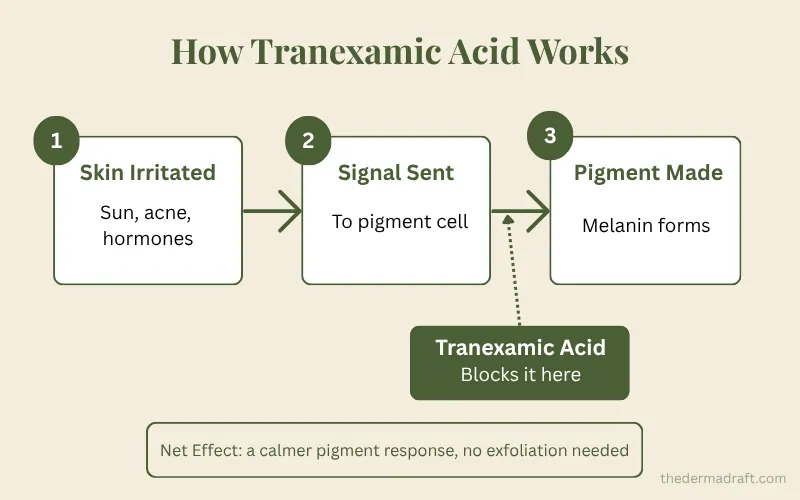
The plain vision is, when skin gets irritated, whether from sun, acne, or hormones, it sends out signals that tell pigment-producing cells to ramp up. Tranexamic acid interrupts that signal early, before the pigment gets made.
That’s different from vitamin C, which acts mainly as an antioxidant and slows an enzyme called tyrosinase, and different again from retinol, which speeds up cell turnover so pigmented cells shed faster. Tranexamic acid works upstream of both, part of why it pairs well with them instead of competing.
What Tranexamic Acid Actually Treats
Melasma shows up as symmetrical brown or grey patches, usually across the cheeks, forehead, or upper lip. Hormones and sun exposure both play a role, which is why it often appears during pregnancy or while taking birth control. It’s the hardest of the three to treat, and the one most likely to return.
A 2026 literature review in the Journal of Cosmetic Dermatology found consistent improvement in pigmentation scores across oral, topical, and combined tranexamic acid treatments for melasma and PIH, with topical use showing a favorable safety profile compared to older treatments like hydroquinone.
Post-Inflammatory Hyperpigmentation (PIH) is the dark mark left behind after skin has already healed, from acne, a cut, or a harsh product reaction. Unlike melasma, PIH isn’t hormonal, it’s a pigment response to inflammation, and it fades on its own eventually, just slowly, sometimes over many months.
Sun spots are small, round, and appear one at a time rather than in connected patches, building up from years of cumulative UV exposure, showing up most on hands, arms, and sun-exposed parts of the face.
Tranexamic Acid and Darker Skin Tones
This is the part of the tranexamic acid conversation that barely gets written, and it should be the main event, not a footnote.
Post-inflammatory hyperpigmentation hits deeper skin tones harder and lasts longer. If you have South Asian, East Asian, Black, Middle Eastern, or Latino skin, you already know this. A single breakout can leave a mark that outlives the acne by months, sometimes years.
Writing this from Pakistan, I can tell you that almost every skincare article about dark spots gets written for a much lighter complexion than the one most people around me actually have.
That gap matters, because treatment that works fine on light skin can backfire on deeper skin. Aggressive exfoliation, high-strength retinoids, and some laser treatments carry a real risk of triggering more pigmentation on melanin-rich skin, not less.
This is where tranexamic acid earns its reputation. It doesn’t exfoliate. It doesn’t provoke the inflammatory response that stronger actives can. It works on the signal that tells pigment cells to activate, treating the discoloration without the same rebound risk.
A comparative clinical trial in Dermatology and Therapy found that 5% topical tranexamic acid performed about as well as 2% hydroquinone, the ingredient long considered the gold standard for stubborn pigmentation, but with noticeably less dryness and irritation . For anyone told hydroquinone is their only real option, that’s a meaningful alternative.
A broader review pooling 21 separate trials, published in BioMed Research International, reached the same conclusion, finding tranexamic acid reliably reduced melasma severity with a low rate of side effects
Dermatology research uses the Fitzpatrick scale to rank skin from palest to deepest, and studies enrolling people across that full scale still reported good results with a low rate of new irritation, a detail that rarely makes it into brand marketing.
Pairing it with niacinamide adds another layer of support, since niacinamide works on a separate part of the pigment pathway, as the guide on using niacinamide and vitamin C together explains in more depth.
None of this means tranexamic acid works identically for every skin tone or mark. PIH from untreated acne behaves differently than melasma triggered by hormones, and both need patience measured in months.
But the gap here isn’t really about the ingredient. It’s about who gets photographed testing it, and whose skin gets treated as the default. If brightening advice has always felt written for someone else’s face, this is one of the few ingredients where the evidence for your skin specifically already exists.
Is Tranexamic Acid Safe During Pregnancy?
Search enough skincare pregnancy guides and you’ll find two confident, opposite answers, worth naming directly instead of pretending the debate doesn’t exist.

One group treats topical tranexamic acid as reasonably safe during pregnancy, pointing to its minimal absorption through skin and its long track record as an oral medication used during childbirth to control bleeding. A small topical amount, under that reasoning, carries limited systemic risk, and pregnancy-related melasma is common enough that a gentle option matters.
Another group takes the more cautious position: there isn’t enough dedicated human research on topical use during pregnancy specifically to call it settled, and since the oral form does affect blood clotting, caution makes more sense than confidence until better data exists. Several estheticians default to recommending azelaic acid or vitamin C instead, both with longer safety track records for this use.
‘Insufficient data’ doesn’t mean researchers found a problem, it means the specific studies needed to close the question, tracking pregnant women using topical tranexamic acid over time, haven’t been done at scale yet, partly because pregnant women are routinely excluded from clinical trials for ethical reasons.
A serum also matters differently from a tablet here. Topical products applied to intact skin absorb into the bloodstream at a tiny fraction of what an oral dose reaches, a distinction that gets flattened every time a headline just says ‘tranexamic acid and pregnancy’ without separating the two.
What actually matters if you’re pregnant: oral tranexamic acid is a separate, more serious conversation that shouldn’t be started, stopped, or self-prescribed without a doctor’s input. For topical use, the more conservative path is to mention it at your next prenatal visit and let your OB weigh in, rather than treating a skincare forum’s confidence as medical guidance.
If you’d rather sidestep the debate completely, azelaic acid has a longer, more settled pregnancy safety record and treats similar concerns, which is exactly why it’s worth its own comparison against tranexamic acid, covered next.
Tranexamic Acid vs Vitamin C
This is the question that brought you here, so let’s answer it directly.
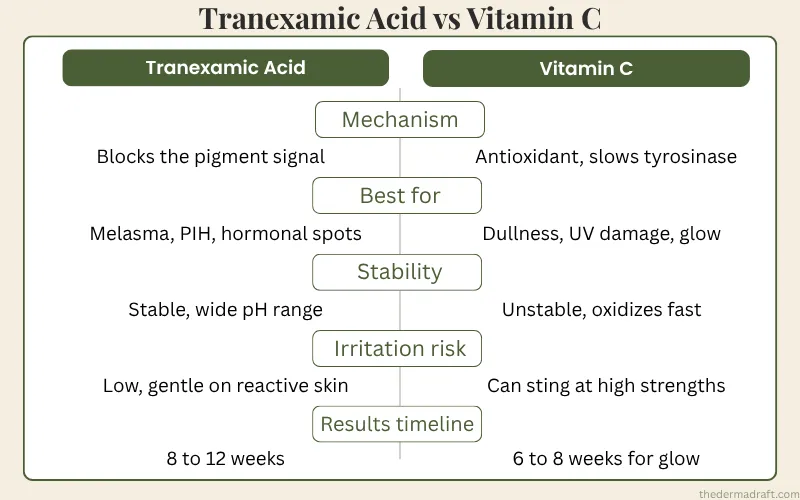
Tranexamic acid and vitamin C aren’t really competing for the same job, even though they get marketed that way. Vitamin C works mainly as an antioxidant: it mops up free radical damage from UV and pollution, supports collagen production, and slows the tyrosinase enzyme that helps make pigment. It’s also unstable in its purest form, L-ascorbic acid, which oxidizes with light, air, and heat exposure.
Tranexamic acid works upstream of that, calming the inflammatory signal that tells pigment cells to activate in the first place. It’s also considerably more stable and tends to sit gentler on reactive or rosacea-prone skin, where vitamin C at higher concentrations can sting or flush.
| Feature | Tranexamic Acid | Vitamin C |
| Main mechanism | Blocks the inflammatory signal that triggers pigment production | Antioxidant, slows the tyrosinase enzyme |
| Best for | Melasma, PIH, hormonal pigmentation | General dullness, UV damage, mild brightening |
| Stability | Stable across a wide pH range | Unstable, especially the L-ascorbic acid form |
| Irritation risk | Low, suits sensitive and rosacea-prone skin | Can sting or flush at higher strengths |
| Results timeline | 8 to 12 weeks | 6 to 8 weeks for glow, longer for spots |
| Can you use both | Yes, they’re complementary | Yes |
Plenty of well-formulated products contain both, since they work on different parts of the same problem. Paula’s Choice built its Clinical Discoloration Repair Serum around this logic, pairing tranexamic acid with niacinamide and bakuchiol rather than relying on it alone.
If you want to pick just one, let your main concern decide it. Melasma or hormonal pigmentation leans toward tranexamic acid. General dullness or early sun damage leans toward vitamin C. Both together cover the most ground.
Tranexamic Acid vs Azelaic Acid
Azelaic acid deserves a mention here: it solves a similar problem through a different route, and it settles the pregnancy question tranexamic acid can’t fully answer yet.
Azelaic acid comes from grains, and it works on pigmentation, redness, and mild acne all at once, largely by calming inflammation and slowing the same tyrosinase enzyme vitamin C affects. It has a longer, better-established pregnancy safety record, making it the more conservative choice if you’re currently expecting.
Where tranexamic acid pulls ahead is in targeting the melasma-and-hormone pathway specifically, and in how gentle it tends to be on skin already inflamed from active breakouts, whereas azelaic acid can cause mild tingling on first use that usually settles within a couple of weeks.
Azelaic acid is the safer default during pregnancy. Tranexamic acid is worth prioritizing outside of pregnancy for stubborn hormonal pigmentation.
How to Actually Use Tranexamic Acid
Look for a concentration between 2% and 5%. That range shows up consistently across the studies with the best results, and going higher doesn’t add much extra benefit. It works across a wide pH range, part of why it’s less fussy about timing than vitamin C.
Most people can use it morning, evening, or both, layered in after cleansing and before moisturizer and it sits fine alongside the other core actives like niacinamide.
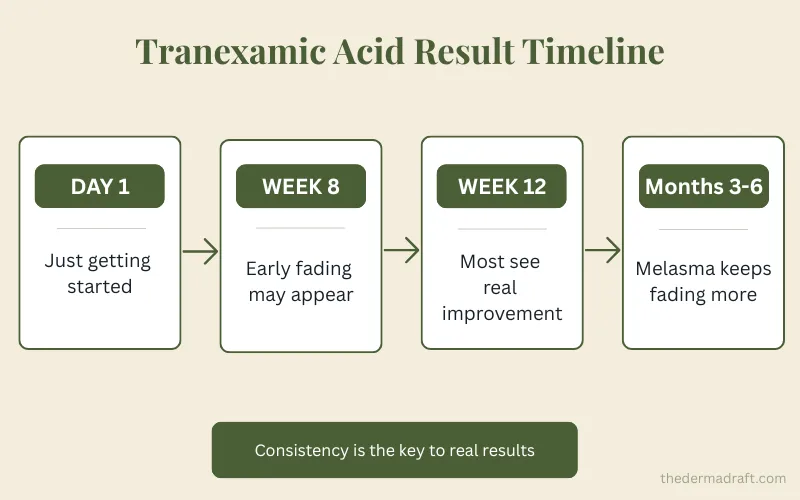
Give it time before judging whether it’s working. Eight to twelve weeks is the realistic window, not the two weeks a product label might imply, and melasma tends toward the longer end.
Sunscreen isn’t optional here. Tranexamic acid calms the trigger that makes new pigment, but it doesn’t undo new sun damage, so skipping daily SPF lets new spots form faster than this ingredient fades the old ones.
Frequently Asked Questions
What does tranexamic acid actually do for skin?
It calms the signal between irritated skin cells and the cells that produce pigment, reducing how much new discoloration forms. It works best on melasma, post-inflammatory marks, and sun spots, through a different pathway than antioxidants like vitamin C.
Is tranexamic acid safe to use during pregnancy?
Topical use divides dermatologists. Some call it reasonably safe given minimal skin absorption; others prefer caution since human research on topical use in pregnancy is still limited. Oral tranexamic acid is a separate conversation for your doctor. If pregnant, raise it at your next prenatal visit rather than deciding from a skincare article.
Does tranexamic acid work on darker skin tones?
Yes, and it’s one of the better-suited options for melanin-rich skin, since it doesn’t rely on exfoliation or aggressive turnover that can trigger more pigmentation. PIH, which affects South Asian, East Asian, Black, and Middle Eastern skin more visibly and for longer, tends to respond well to it.
Should I switch from vitamin C to tranexamic acid?
Not necessarily. They target pigmentation through different pathways and work well together rather than as replacements. If melasma or hormonal pigmentation is your main concern, prioritize tranexamic acid. If it’s general dullness, vitamin C covers that better.
How long does tranexamic acid take to work?
Most people need 8 to 12 weeks of consistent use before seeing a real difference, and melasma specifically often takes longer. Patience matters more than the concentration on the label.
Can I use tranexamic acid and niacinamide together?
Yes. They target pigmentation from different angles, with no known conflict. Many brightening formulas intentionally combine the two for exactly this reason.
What’s the difference between tranexamic acid and azelaic acid?
Both treat pigmentation, but azelaic acid has a longer pregnancy safety record and also helps with redness and mild acne. Tranexamic acid targets the hormonal pigment pathway more specifically. A full comparison is coming as its own guide.
Does tranexamic acid replace sunscreen for hyperpigmentation?
No. It slows new pigment formation but doesn’t block UV rays. Skipping sunscreen means new sun-triggered spots can form faster than old ones fade, cancelling out most of the benefit.
The Bottom Line
Tranexamic acid earned its current moment the slow way, through more than a decade of dermatology use before skincare brands caught up. Ingredients built on quiet evidence tend to hold up better than ones built on a viral video.
It treats melasma, PIH, and sun spots through a real, different pathway than vitamin C, and it’s one of the better options for deeper skin tones specifically, something almost nobody says out loud. The pregnancy question genuinely doesn’t have a settled answer yet, and pretending otherwise helps no one.
Give it 8 to 12 weeks. Pair it with daily sunscreen. Don’t let anyone tell you that you have to choose between this and vitamin C, and don’t expect it to replace every other active in your routine either.
Related Articles
- Niacinamide, hyaluronic acid, and retinol: The complete guide on three core ingredients & how you can use these alongside other
- Niacinamide and vitamin C together: the pH myth explained, and why it matters for pigmentation
- How long skincare actually takes to work: realistic timelines for every active
Sources
- Happi / Spate Industry Trend Report (2026): Tranexamic Acid Cream, Retinal Serums Lead K-Beauty Skincare Trends
- BeautyMatter (2025): 2026 K-Beauty Forecast: Top 7 Data-Backed Trends
- Journal of Cosmetic Dermatology (2026): Tranexamic Acid for Hyperpigmentation Disorders: A Literature Review on Efficacy and Safety in Melasma and PIH
- Dermatology and Therapy (2017): Therapeutic Effects of Topical Tranexamic Acid in Comparison with Hydroquinone in Treatment of Women with Melasma
- BioMed Research International (2018): Tranexamic Acid for Adults with Melasma: A Systematic Review and Meta-Analysis
About the Author
Hi, I’m Sidra.
I’m not a dermatologist or any kind of skincare pro, I’m just someone like you, who got sick of constantly switching up products and never having a clue what was really working. After years of trial and error, I decided to focus on one thing: consistency.
I test routines on myself, I track results in detail, and I write about what realistically shifts and what doesn’t. My aim is to dispel hype and discuss skin-care the way I would with a friend: practical, honest, and backed by patience instead of promises.
Skin type: Normal to dry skin with mild sensitivity
The information in this article is for educational purposes only and does not replace professional dermatological advice. If you have a specific skin condition or concern, please speak with a qualified healthcare provider.